Blue lips, severe chest indrawing, pauses in breathing, or unusual drowsiness require emergency help rather than a routine clinic appointment. By the end, you will know how to judge urgency, count breathing accurately, prepare for a pediatric assessment, and choose between a pediatrician, emergency department, ambulance, or specialist in Kharadi.
Key takeaways
- Call 112 for blue lips, severe breathing effort, collapse, or inability to speak or drink.
- Arrange same-day pediatric review for wheezing, fast breathing, or worsening cough.
- Bring your child’s medicines, vaccination record, symptom timeline, and videos of noisy breathing.
- A pediatrician can assess colds, asthma, bronchiolitis, pneumonia, and other respiratory problems.
Which breathing symptoms need emergency care in Kharadi?
Call India’s unified emergency number 112 or go directly to an emergency department if your child has any of these signs:
- Blue or grey lips, face, or tongue
- Severe chest indrawing, with the skin pulling sharply between or below the ribs
- Grunting with each breath
- Pauses in breathing
- Sudden choking
- Inability to speak or cry normally because of breathlessness
- Inability to drink or breastfeed
- Unusual sleepiness or difficulty waking
For child breathing problems in kharadi, use this decision guide:
| Situation | Action | Reason |
|---|---|---|
| Comfortable, alert, drinking normally, no red flags | Arrange pediatrician review | Outpatient assessment is appropriate |
| Worsening breathing effort or new noisy breathing | Seek urgent medical assessment | Breathing can deteriorate quickly |
| Blue or grey colour, apnea, choking, altered responsiveness, or inability to drink | Call 112 or go to an emergency department | These are emergency danger signs |
Do not wait for a booked pediatrician appointment when your child is worsening. A home pulse oximeter reading can look reassuring while breathing effort, exhaustion, airway blockage, or circulation is deteriorating; readings can also be inaccurate when the child moves, the probe sits poorly, or hands are cold.
Treat the child’s appearance and breathing effort as urgent warning signs, not the number alone.
When should you call a pediatrician the same day?
Count breaths for a full 60 seconds, not 15 seconds multiplied by four. Wait until crying, fever, and recent activity have settled, keep the child calm, and watch the chest or abdomen for each rise.
- Compare the count with WHO fast-breathing thresholds: 60 or more breaths per minute for an infant under 2 months; 50 or more for a child aged 2 to 12 months; and 40 or more for a child aged 12 months to 5 years.
- Arrange same-day assessment if fast breathing persists when calm, or if the child has wheezing, a barking cough, persistent cough, noisy breathing, chest pain, an unexpectedly low or falling oxygen reading, or worsening symptoms.
- Tell the pediatrician whether the child is drinking normally and passing urine. Poor intake or fewer wet nappies can signal deterioration even when the cough sounds mild.
Fast breathing alone does not diagnose pneumonia; the clinician must assess effort, chest indrawing, oxygen saturation, fever, hydration, and feeding. A wheeze is a musical sound, usually on breathing out; stridor is a harsh upper-airway noise, especially concerning when present at rest; rattling usually comes from mucus. Stridor at rest needs urgent assessment.
A recording can help distinguish sounds, but never delay care to make one. When choosing a child respiratory problems pediatrician in Kharadi, or a pediatrician for respiratory problems in Kharadi, ask whether these checks are available.
Could it be a cold, asthma, bronchiolitis, or another problem?
Use these patterns to guide the next step, not to diagnose at home. For child breathing problems in Kharadi, a pediatrician should assess the whole child, including feeding, hydration, breathing effort, and oxygenation.
| Pattern | Clues | Important distinction |
|---|---|---|
| Common cold | Runny or blocked nose, sneezing, mild cough, low-grade fever | Viral; mucus turning yellow or green does not prove bacterial infection |
| Bronchiolitis | In an infant or toddler, a cold followed by cough, wheeze or crackles, faster breathing, and difficult feeding | Poor feeding and dehydration can matter more than the cough sound |
| Croup | Barking cough, hoarse voice, and harsh upper-airway noise | Stridor at rest is urgent, especially with drooling or severe distress |
| Asthma | Recurrent wheeze or cough, including at night or during exercise; triggers, eczema, or allergies may support the pattern | Wheeze alone does not confirm asthma in a preschool child |
| Pneumonia | Concerning fever with fast or difficult breathing, chest indrawing, low oxygen, or an unwell appearance | Clinical findings, not mucus colour, guide antibiotic decisions |
| Allergic rhinitis | Repeated sneezing, itchy nose or eyes, clear discharge, and dust or seasonal triggers | Usually lacks fever and marked breathing effort |
| Foreign body | Sudden choking followed by cough, wheeze, or one-sided breathing change | Seek urgent assessment after aspiration |
| Smoke or pollution irritation | Cough, throat or eye irritation after exposure | Remove the exposure; worsening breathing needs assessment |
Antibiotics do not treat viral colds or uncomplicated bronchiolitis. Ask a pediatrician for respiratory problems in Kharadi about hydration whenever drinking falls, wet nappies or urinations decrease, or the child seems dry or unusually sleepy.
What will a pediatrician check, and what should you bring?
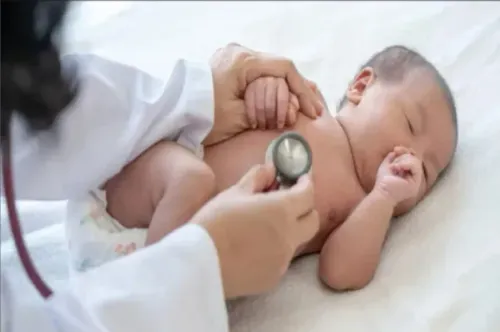
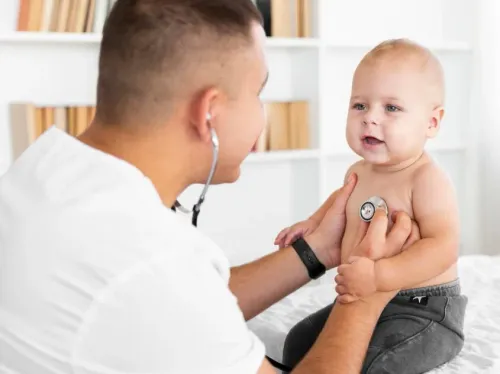
A useful respiratory consultation checks more than wheeze. Ask the pediatrician to measure oxygen saturation, count respiratory rate, assess work of breathing, listen to chest sounds, take temperature, check hydration, and observe whether the child can drink or feed.
A pulse oximeter can mislead when the child is moving, the probe is poorly positioned, or hands and feet are cold. A low reading needs clinical confirmation; a reassuring reading does not override worsening breathing.
Prepare these details before seeing a child respiratory problems pediatrician in Kharadi:
- Record when symptoms began, every fever reading, and a calm, one-minute breathing count.
- Note triggers, nighttime symptoms, exercise symptoms, sick contacts, tobacco smoke or pollution exposure, and any breathing difficulty between infections.
- List every medicine, dose, inhaler, and nebuliser medicine given, including the time of the last dose.
- Bring allergy history, vaccination history, and details of eczema or previous wheezing.
- Record a short video of intermittent cough, wheeze, or stridor when the child is safe and comfortable.
The video can help distinguish a cough, wheeze, and stridor, but never delay emergency care for filming. Take the child urgently for blue or grey lips, severe chest indrawing, pauses, grunting, inability to drink, unusual sleepiness, or difficulty waking.
Where should you go: pediatrician, emergency department, or specialist?
A comfortable, alert child who drinks normally and has no red flags can usually start with a pediatrician. Severe breathing distress, blue or grey lips, pauses in breathing, altered responsiveness, choking, or inability to drink requires an emergency department or ambulance; call 112 in India.
| Option | Choose it when | What happens |
|---|---|---|
| Pediatrician | The child is stable but has wheeze, cough, fever, noisy breathing, or worsening symptoms | Examines breathing, oxygen level, hydration, and likely causes |
| Emergency department | There is cyanosis, apnea, severe chest indrawing, grunting, choking, or difficulty waking | Receives immediate assessment and stabilisation |
| Specialist | Symptoms recur, persist, or point to one body system | Provides focused respiratory or airway evaluation |
Recurrent wheeze or cough deserves pediatric respiratory evaluation, especially with night symptoms, exercise limitation, symptoms between infections, eczema, allergic disease, or repeated treatment. An ENT specialist can help with persistent stridor or other upper-airway noise, particularly after suspected foreign-body aspiration. Consider a pulmonologist for ongoing or difficult-to-control symptoms.
An infant younger than 3 months with a temperature of 38°C or higher needs prompt assessment, even if breathing appears comfortable.
When comparing a child respiratory problems pediatrician in kharadi, do not select the “best pediatrician in kharadi” from ratings alone. Ask whether the doctor has pediatric training, Indian medical registration, respiratory assessment capability, written follow-up instructions, and a clear urgent hospital referral pathway.
These are sensible checks when considering Dr. Yogesh Pawar or any pediatrician for respiratory problems in kharadi.
Related services
A pediatrician is a medical doctor who manages the physical, behavioral, and mental care for children from birth until age 18. View service → |
Pediatric Clinic in Kharadi Pediatrics is the branch of medicine dealing with the health and medical care of infants, children, and adolescents from birth up to the age of 18. View service → |
Frequently asked questions
Which breathing symptoms need emergency care in Kharadi?
Call India’s unified emergency number 112 or go to an emergency department for blue or grey lips, severe chest pulling, pauses in breathing, collapse, unusual drowsiness, choking, or inability to speak, cry, drink, or breastfeed because of breathlessness.
When should I call a pediatrician the same day?
Arrange same-day medical assessment for new wheezing, fast or laboured breathing, worsening cough, fever with breathing difficulty, repeated vomiting with cough, reduced drinking, fewer wet nappies, or symptoms in a premature child or a child with heart or lung disease.
Could my child’s symptoms be a cold, asthma, bronchiolitis, or another problem?
A cold often causes a runny nose and cough; asthma causes recurring wheeze, cough, or breathlessness; bronchiolitis affects babies with cough, wheeze, and feeding difficulty. Pneumonia, croup, allergies, and inhaled objects need different assessment and treatment.
What should I bring to a pediatrician visit for breathing problems?
Bring the child’s medicines and inhalers, vaccination record, allergy history, symptom timeline, temperature readings, and a video of noisy breathing or coughing. Note drinking, urination, sleep, and any breathing rate you counted.
Should I see a pediatrician, emergency department, or specialist?
Use an emergency department for severe or rapidly worsening breathing difficulty. See a pediatrician for assessment of non-emergency symptoms, diagnosis, and follow-up. A pediatric pulmonologist may be needed for persistent, recurrent, or unexplained breathing problems.
Related service
Consultation Of Child in Kharadi Consultation Of Child in Kharadi Consultation Of Child in Kharadi View service → |
Keywords