
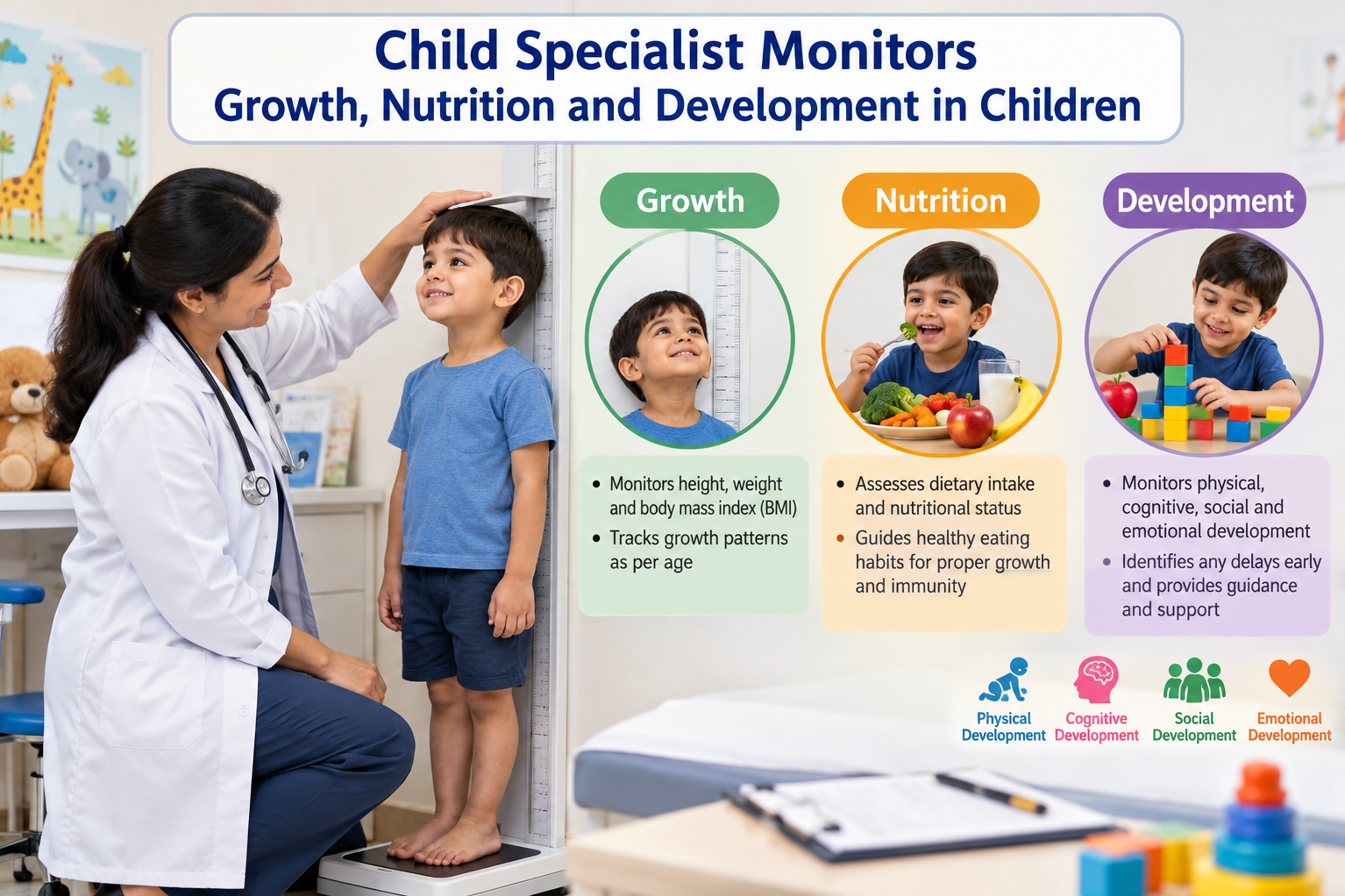
A child's health cannot be assessed only by whether they are frequently sick. Growth, nutrition, physical development, language, movement, learning, sleep, and social interaction all provide valuable information about overall well-being.
A child specialist for growth nutrition and development monitors these areas over time. The goal is not to compare every child with another child of the same age, but to understand whether the individual child is progressing consistently and appropriately.
Growth monitoring commonly includes measurements such as height or length, weight, and other age-appropriate parameters. These measurements become more meaningful when plotted and compared over several visits. A single weight measurement may reveal little, while a change in the child's growth pattern can provide useful clinical information.
Nutrition is closely connected with growth. During consultations, parents may be asked about breastfeeding, formula feeding, complementary foods, meal patterns, food variety, appetite, and feeding behaviour.
Common concerns include:
- Picky eating
- Poor appetite
- Excessive milk consumption
- Slow weight gain
- Rapid weight gain
- Constipation
- Suspected nutritional deficiencies
- Difficulty transitioning to solid foods
Development is another important component. A child specialist may discuss when the child begins sitting, walking, using words, communicating needs, playing with others, and performing age-appropriate activities. Milestones occur within ranges, so one difference does not automatically mean a developmental disorder.
Parents in Chandan Nagar, Pune, Maharashtra may find periodic child health visits particularly useful during infancy and early childhood, when physical and developmental changes happen quickly. These appointments allow concerns to be discussed before they become more noticeable at school or in everyday activities.
Dr. Yogesh Pawar can assess growth and developmental progress while considering birth history, nutrition, previous illnesses, family growth patterns, and other relevant factors.
Parents can support these assessments by sharing practical observations. For example, mention if a child has stopped eating foods they previously accepted, has lost a skill they previously demonstrated, struggles to hear or communicate, or seems significantly different from children of a similar age.
Growth charts are useful tools, but they should be interpreted clinically. Being smaller or taller than another child does not automatically indicate a problem. The child's growth trajectory, family characteristics, nutrition, health history, and developmental progress all matter.
Regular monitoring provides a longitudinal picture that a one-time consultation cannot. It allows pediatric care to move beyond treating infections and toward supporting healthy growth, nutrition, development, and preventive care throughout childhood.
Keywords